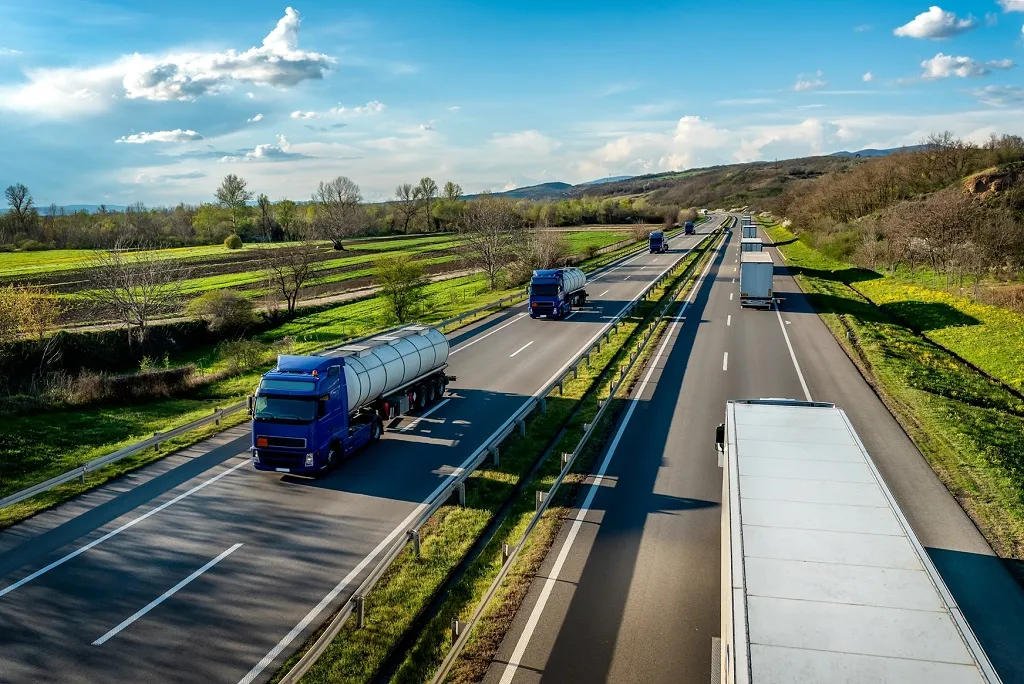
Being introduced at the onset of the COVID-19 outbreak in order to prevent shortages of essential goods and medical equipment, the Green Lanes initiative had proven to be one of the most successful examples of regional cooperation. Since then, the concept evolved into a broader framework, effective in reducing delays, cutting costs, and enhancing the competitiveness of businesses across the Western Balkans.
Following the successful implementation in the region, the initiative for Green Lanes linking the EU and the Western Balkans, jointly undertaken by the Transport Community’s and CEFTA’s Secretariats with the support of the European Commission, was established as a priority at the EU-Western Balkans Summit in Sofia in 2020 and reaffirmed at subsequent summits, with the Comprehensive Roadmap for Enhancing Green Lanes, Improved Customs Cooperation and Modernisation of Border/Common Crossing Points being endorsed by the EU-Western Balkans Summit Brussels Declaration in 2024.
The primary objective of the CONNECTA 2 assignment, which builds on the Roadmap’s Pillar 3: Modernisation of 11 pairs of BCPs, is to conduct comprehensive feasibility studies and develop the detailed designs for the modernisation of the priority Green Lanes border crossing points, namely:
- Kakavia – Ktismata (ALB-GRC)
- Horgoš – Röszke (SRB-HUN)
- Batrovci – Bajakovo (SRB-CRO)
- Gradina – Kalotina (SRB-BGR)
- Vatin – Stamora Moravița (SRB-ROU)
- Debeli Brijeg – Karasovići (MNE-CRO)
- Bogorodica – Evzoni (MKD-GRC)
- Deve Bair – Gyueshevo (MKD-BGR)
- Hani i Elezit – Blace (KOS*-MKD)
- Bosanski Šamac – Slavonski Šamac, including Donji Svilaj – Svilaj (BIH-CRO)
- Gradiška – Stara Gradiška (BIH-CRO)
The assistance will provide technical, economic, environmental and social foundations for investment planning, while ensuring that the upgraded border crossings meet EU standards for efficiency, safety, security, and sustainability.
The specific objectives of the assignment are to:
- Review and verify the existing Green Lanes project fiches and additional available information, and update, as needed, the current conditions and operational procedures at the above-mentioned BCPs/CCPs and identify infrastructure and process improvements needed to streamline border operations;
- Prepare a feasibility-level advanced preliminary design, including economic appraisal and cost-benefit analysis, to support investment justification;
- Develop technical specifications for all proposed equipment and systems to enhance border clearance efficiency, such as weighing devices, scanners, and security infrastructure;
- Develop the detailed design, including architectural, engineering, and environmental specifications, and prepare tender documentation to enable timely procurement and implementation of works; and
- Ensure that the upgraded facilities integrate smart border solutions, climate resilience, energy efficiency, and user-friendly features while allowing flexibility for potential future EU accession scenarios.
To mark the start of the CONNECTA 2 sub-project ‘Feasibility Study and Detailed Design for the Modernisation of Priority Green Lanes Border Crossing Points in the Western Balkans’, a kick-off meeting was held on 22 June, 2026. The meeting was attended by the representatives of the European Commission’s Directorate-General for Enlargement and the Eastern Neighbourhood, the Permanent Secretariat of the Transport Community, the World Bank Group and the CONNECTA 2 team. A series of meetings with the Western Balkans partners will be organised during the sub-project’s Inception phase.
* This designation is without prejudice to positions on status, and is in line with UNSCR 1244/1999 and the ICJ Opinion on the Kosovo Declaration of independence.
***
Additional information on the assignment can be obtained by contacting Chris Germanacos, CONNECTA 2 Team Leader, at chris.germanacos@connecta-ta.eu.